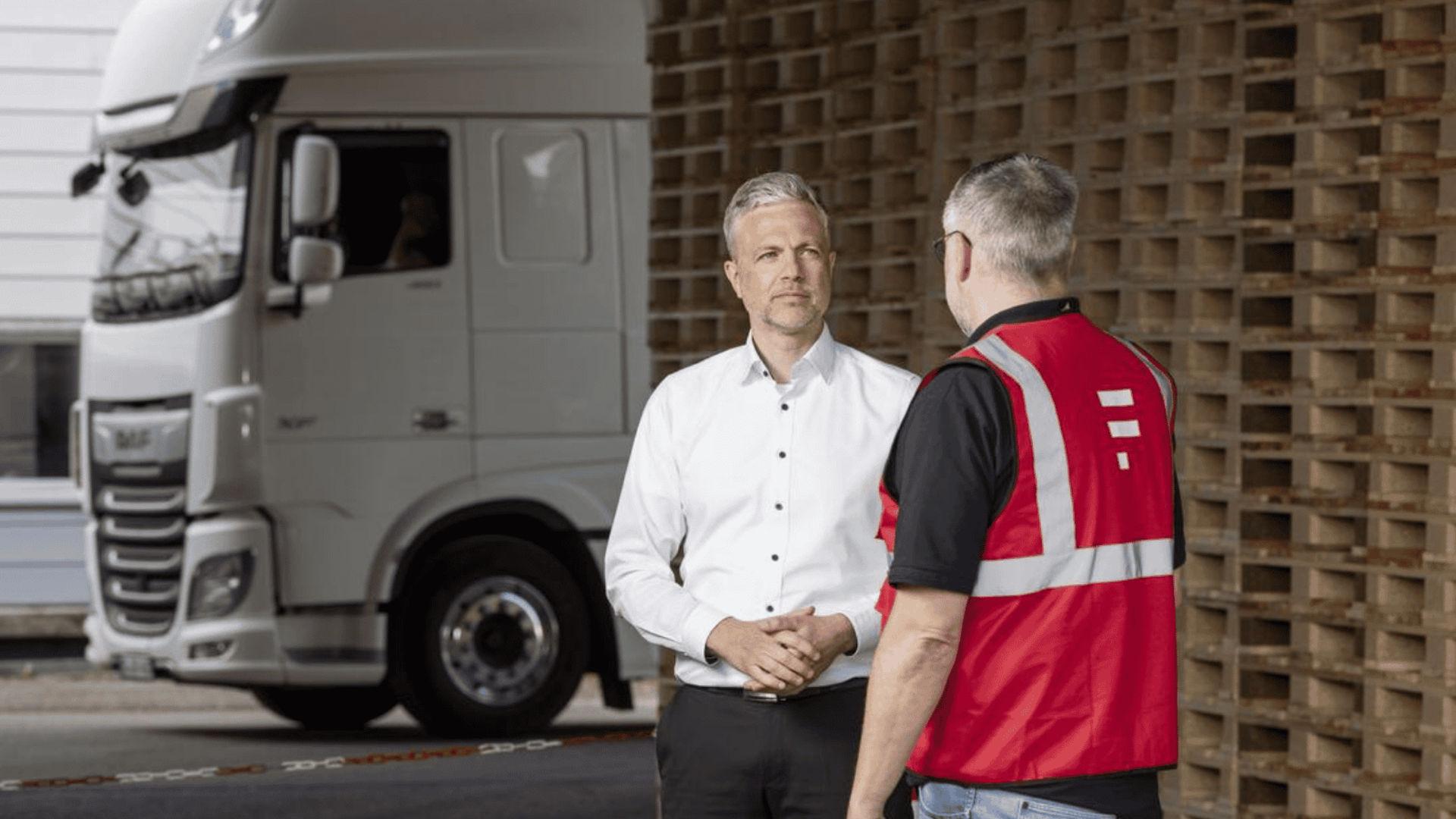
A designated location, limited scope
You have approved a production site for packaging supplied by your supplier. This site is designed to handle specific quantities and deadlines. If an order is larger than planned or a deadline is tight, the site may reach its limits, even if your supplier operates other plants.
An additional authorised site can accommodate this. However, it also involves work: audits, change control, samples and validation.
The real question is therefore not whether an additional site would be a good idea, but whether the benefits for your specific product outweigh the effort involved.
This page outlines what matters here: benefits, effort and a practical example.
Whether it’s worth the effort depends on two questions:
What do you get in return?
And how much more complicated will your day-to-day operations become?
What you get: With suitable products, you can route orders to an additional site if your demand fluctuates or a deadline is tight. If a suitable product is approved at an early stage, the option is there when you need it – not just when a site goes down.
What shouldn’t become more complicated: Strategic and commercial matters remain the responsibility of your central key account manager. Local contacts are only involved when you need them. And Faller complements your multi-supplier strategy; it does not replace it.
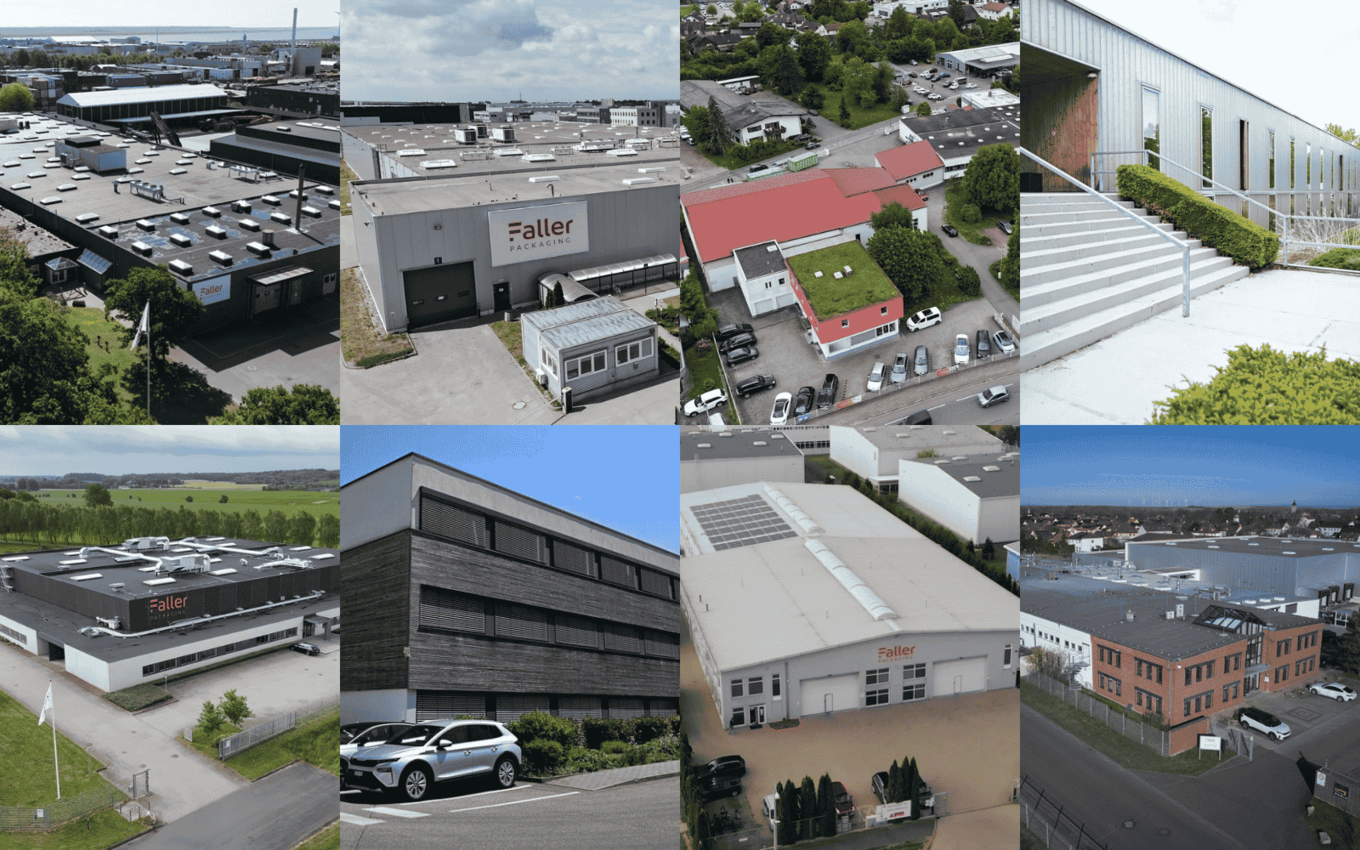
Faller Packaging manufactures at eight sites across four countries. Which plants are suitable for your product depends on the specifications, volume and supply situation, as well as which sites you have approved. Our site in Gebesee manufactures both folding boxes and leaflets and is therefore included in both lists.



1 specialist site for labels
At its Schopfheim site, Faller Packaging produces, amongst other things, multi-layer labels, tamper evident labels, documentation solutions and labels with security features.
There is currently one site within the network specialising in labels. The question of establishing a further site therefore arises primarily in relation to folding cartons and leaflets.
We interviewed 36 decision-makers and experts in packaging procurement across Europe, from Big Pharma, CDMOs, consumer health, speciality pharmaceuticals and medical technology. They rated, on a scale of 1 to 5, how important various criteria are when a company is considering qualifying an additional site belonging to an existing supplier.
The key finding: Most respondents do not reject an additional site out of hand. Whether they approve it depends on whether the expected benefits outweigh the perceived internal effort involved. The biggest hurdle is the effort required for approval, particularly internal quality assurance, change control and limited capacity.
Three criteria determine whether the effort is worthwhile:

Positive cost implications
What is required is a transparent business case that justifies the approval process internally. This cannot be derived in general terms from a production network. The decisive factors are the product, volume, a suitable location, and the training and logistical costs involved.
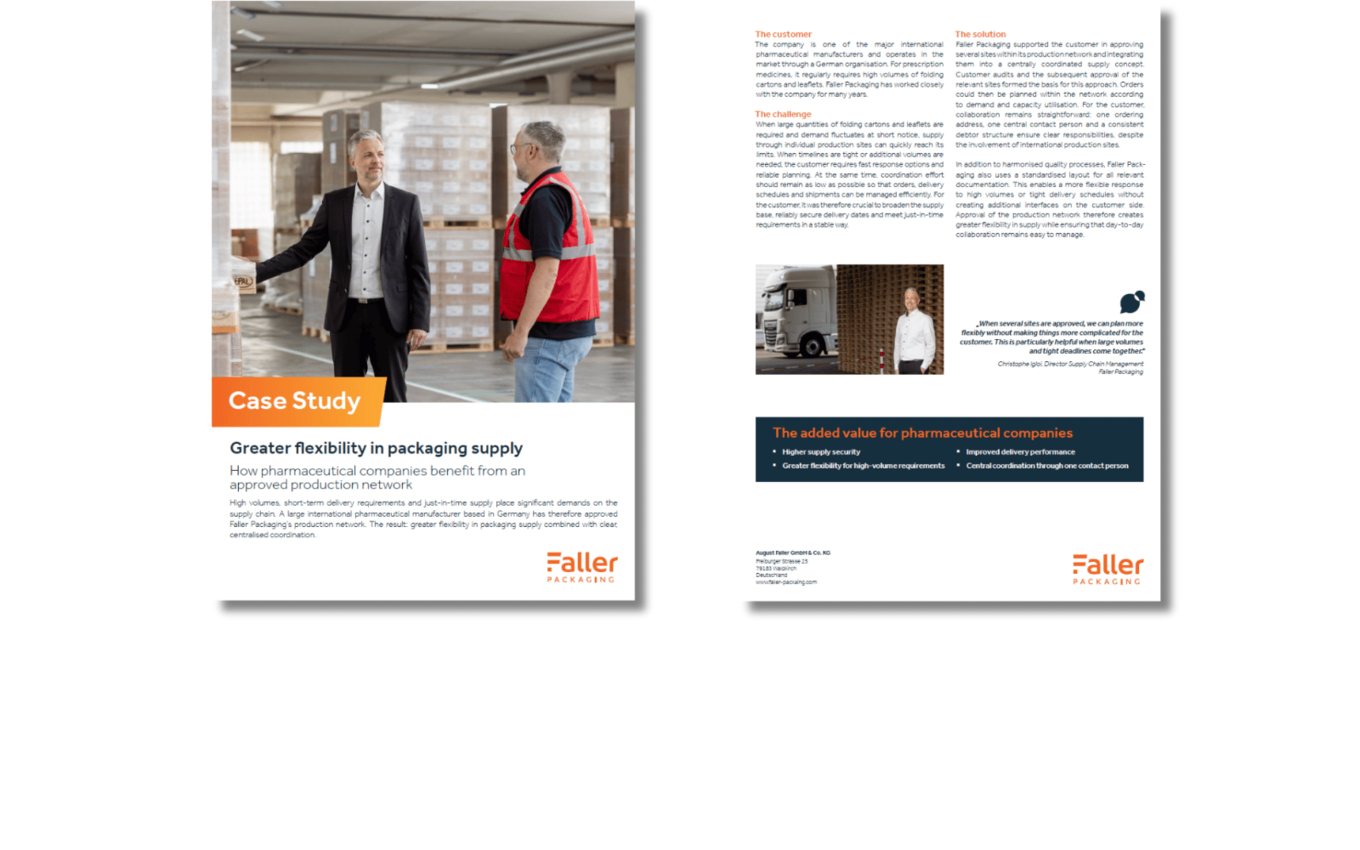
A major international pharmaceutical manufacturer based in Germany regularly requires large volumes of folding cartons and leaflets. When faced with short-term fluctuations in demand and tight deadlines, sourcing from individual sites reached its limits.
What the customer did: Based on customer audits, the customer approved several Faller production sites. This enabled orders to be scheduled across the network according to demand and capacity utilisation.
What remained the same for the customer: a single ordering address, a central point of contact, a standardised accounts receivable structure and a standardised layout for documentation.
What has changed: greater flexibility with large volumes and tight deadlines, without the need for additional interfaces. This meets the condition cited by respondents: clear, centralised responsibility.
Why there are no key figures here: One customer requires 5,000,000 standard folding boxes, whilst another needs 250,000 special constructions with inlays. The materials, machinery and expertise involved differ completely. A blanket figure for approval times or delivery performance would therefore not do justice to either of them. We will work with you to determine what this means for your specific product.
Which of your products would benefit from an additional site?
We’ll look into this with you, for a product of your choice:
Which site is technically suitable?
What benefits can realistically be expected in terms of supply reliability, lead times and costs?
What approval process will you need to go through?
This will give you a basis for your internal business case.
Speak to your Faller contact. Don’t have one yet? Then get in touch with us directly:

FAQ on security of supply and production networks
Approval is worthwhile if the expected benefits justify the internal costs of qualification and changeover.
Potential benefits include a more robust supply chain, additional planning options, geographical proximity, positive cost effects or improved delivery performance. On the cost side, these include audits, change control, samples, validation and, where applicable, production line trials.
Our survey shows that it is precisely this cost-benefit analysis that significantly influences how open companies are to an additional site. You should therefore draw up a business case for your product and your supply situation before the approval process begins. We will work with you to develop the answers regarding location, benefits and costs.
No. The sites have different technical specialisms, product ranges and manufacturing capabilities.
In addition, product specifications, machinability, quantities, quality requirements and customer approvals must be taken into account.
Faller Packaging therefore assesses, for each product, which additional production options make technical and economic sense.
A production network does not imply automatic interchangeability, but rather the ability to prepare suitable alternatives in a targeted manner.
Having several approved locations can create additional options for action and planning. This is particularly relevant in the case of large volumes, fluctuations in demand, short-notice delivery requirements or increased demands on supply security.
However, the actual benefits vary from product to product.
Additional sites do not automatically guarantee shorter delivery times or additional capacity that is available at all times. Their value lies in the fact that, for suitable products, there are more operational possibilities than when supply comes from just one site.
We begin with a product-specific assessment: Which site is technically suitable? What benefits are realistic? What approval process will you need to go through?
We then work with you to map out what is required in terms of audits, qualification, samples, validation and operational transition.
Experience from previous approvals shows that it can be helpful to involve the relevant departments at an early stage and to justify the approval internally by highlighting the specific benefits for your company.
Whether a site is actually suitable and can be approved must be assessed on a case-by-case basis for your product and your specific situation.
Folding cartons are manufactured at Faller Packaging in Waldkirch, Gebesee, Łódź, Hvidovre and Horsens.
Leaflets are produced in Binzen, Gebesee and Debrecen.
The sites differ in their areas of specialisation, for example in standard products, special constructions, finishing processes and various folding and outsert formats.
The suitability of a particular site for a specific product must be assessed on the basis of the product specification, the required quantity, the technical requirements and the supply situation.